Issues facing students related to changes to the Ontario Student Assistance Program (OSAP) and global instability remain top topics of discussion at the March Board of Trustees (BOT).
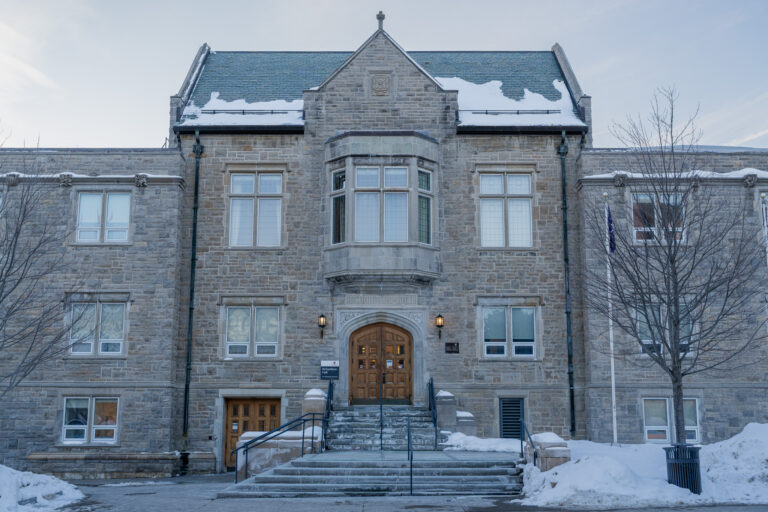
The BOT met on March 6 at 4:30 p.m., in Richardson Hall, primarily focusing on reports and presentations for its roughly one and a half hour meeting, alongside the approval of increased residence fees and new educational institutes. The meeting kicked off with the approval of the Aging and Geroscience Excellence for Well-being, Increased HealthSpan and Enablement Institute and the establishment of the Assessment and Evaluation Centre in Education. The Board approved the proposals unanimously.
To honour Sustainable Development Goals (SDG) month, Department Head of Global Development Studies and Special Advisor on SDGs Marcus Taylor gave a 15-minute presentation on their importance, explaining they’re a way to encourage interdisciplinary work among researchers.
In Board Chair David Court’s remarks, he mentioned the passing of Amin Nazari, a fourth year Commerce student who was involved in student politics in many roles, including as Commerce Society vice-president, and the passing of Principal Emeritus Bill Leggett. The Board held a brief moment of silence for both individuals.
Principal Patrick Deane addressed trustees briefly, pointing members to the written principal’s report and highlighting several key developments affecting the University.
Deane acknowledged ongoing global conflicts, particularly in the Middle East, noting their impact on members of the university community with family or personal ties to affected regions. He said while Queen’s does not take political positions, he said the University has a responsibility to support community members navigating these global tensions.
He welcomed the Government of Ontario announcement of a $6.4 billion investment in higher education, calling it long overdue, but flagged concerns about potential affordability impacts tied to changes to OSAP, which decreased the amount of grants students can receive.
Student Reports
Rector Niki Boytchuk-Hale addressed trustees about what she described as the “elephant on campus,” outlining several challenges affecting students in recent months while highlighting areas where the University community could offer support.
She began by reflecting on the recent loss of Nazari, describing his impact on the campus community and emphasizing the need for continued support for students beyond the immediate aftermath of tragedies.
She also pointed to the stress faced by about 200 Iranian students at Queen’s whose families are affected by the ongoing conflict, noting that while emergency financial aid and deferred tuition have helped, the Queen’s Iranian Association says “the current options aren’t sufficient for the level of trauma that’s ongoing.”
Additionally, she discussed provincial policy changes, saying students largely understand the recent two per cent tuition increase but remain concerned about planned changes to OSAP that shift funding away from grants toward loans.
In her final address to trustees, former AMS President Jana Amer told Trustees she will be resigning from her role effective March 9, describing the decision as the result of an “immensely hard” year marked by instability, heavy workload, and what she called unsupported systems within the institution.
Amer said her experience reflected broader challenges facing students, emphasizing that many feel “under strain,” invisible, and struggling simply to remain enrolled. She warned that provincial policy changes—particularly rising tuition and shifts to OSAP funding—could increase student debt and financial pressure, arguing that institutional financial stability should not come “at a cost of their own stability.”
She urged Trustees to respond proactively to these pressures and ensure stronger support systems for students.
Board Address
Community members at large are permitted to make remarks to the board upon request. At this meeting, President of the Queen’s University Faculty Association (QUFA) Karen Rudie spoke to the BOT “primarily to make a plea for greater connection between the Board of Trustees and the people you’re entrusting to carry out permission of Queen’s, namely the faculty at Queen’s.”
She went on to explain that she completed her own degree at Queen’s, before pursuing postgraduate degrees and research visits around the world, which gives her perspective on what the experience was like at Queen’s, what it can be, and what it currently is.
“I had the luxury of sitting in small classes, getting to know my professors, and those professors weren’t overworked in the same way that we are. My experience of my professors was one of being able to glimpse the excitement that they felt at being teachers and researchers. That magic is gone,” Rudie said.
She said they can create new magic by encouraging engagement from the Board and argued that the BOT and Senate, the two main decision-making bodies of the University, aren’t communicating well with one another, and faculty are “caught in the middle.”
Committee Reports and Approval
Board then moved into committee chair reports. Chair of the Finance, Assets, and Strategic Infrastructure Committee, Sheila Murray. She said the committee met for a two and a half hour meeting and discussed multiple topics, including a motion to raise residence fees. She said the increase is to make sure the residence stays sustainable, adding it’s below the rate of inflation.
The increases range from three per cent to 4.25 per cent, depending on the room type. Single plus rooms are going to see the largest increase, a rise of 4.25 per cent from $19,299 to $20,119. This mirrors similar changes last year, where residence prices saw an increase of upwards of four per cent.
READ MORE: Board of Trustees raises residence and non-domestic tuition fees
The motion passed unanimously with no discussion.
Chair of the University Culture Committee, Nancy Evans spoke about the Student Mental Health Policy Annual Report, which is done annually and presented to the provincial government.
She said there have been some “very strong positive indicators and encouragement in the report,” adding that, overall, reports of well-being among Queen’s students have improved since 2022 and are equal to or better than national benchmarks. However, she also added that many students are also experiencing “significant challenges and significant stressors,” especially among those facing financial stress or identity-related issues.
Following Evans’ report, Court wrapped up by saying the meeting was one of the “highest quality discussions of student experience that I’ve seen since I joined the Board,” before moving to adjournment.
The next BOT open session is set for May 8.
Tags
2026 OSAP Changes, Board of Trustees, Sustainable Development Goals
All final editorial decisions are made by the Editor(s) in Chief and/or the Managing Editor. Authors should not be contacted, targeted, or harassed under any circumstances. If you have any grievances with this article, please direct your comments to eic@queensjournal.ca.