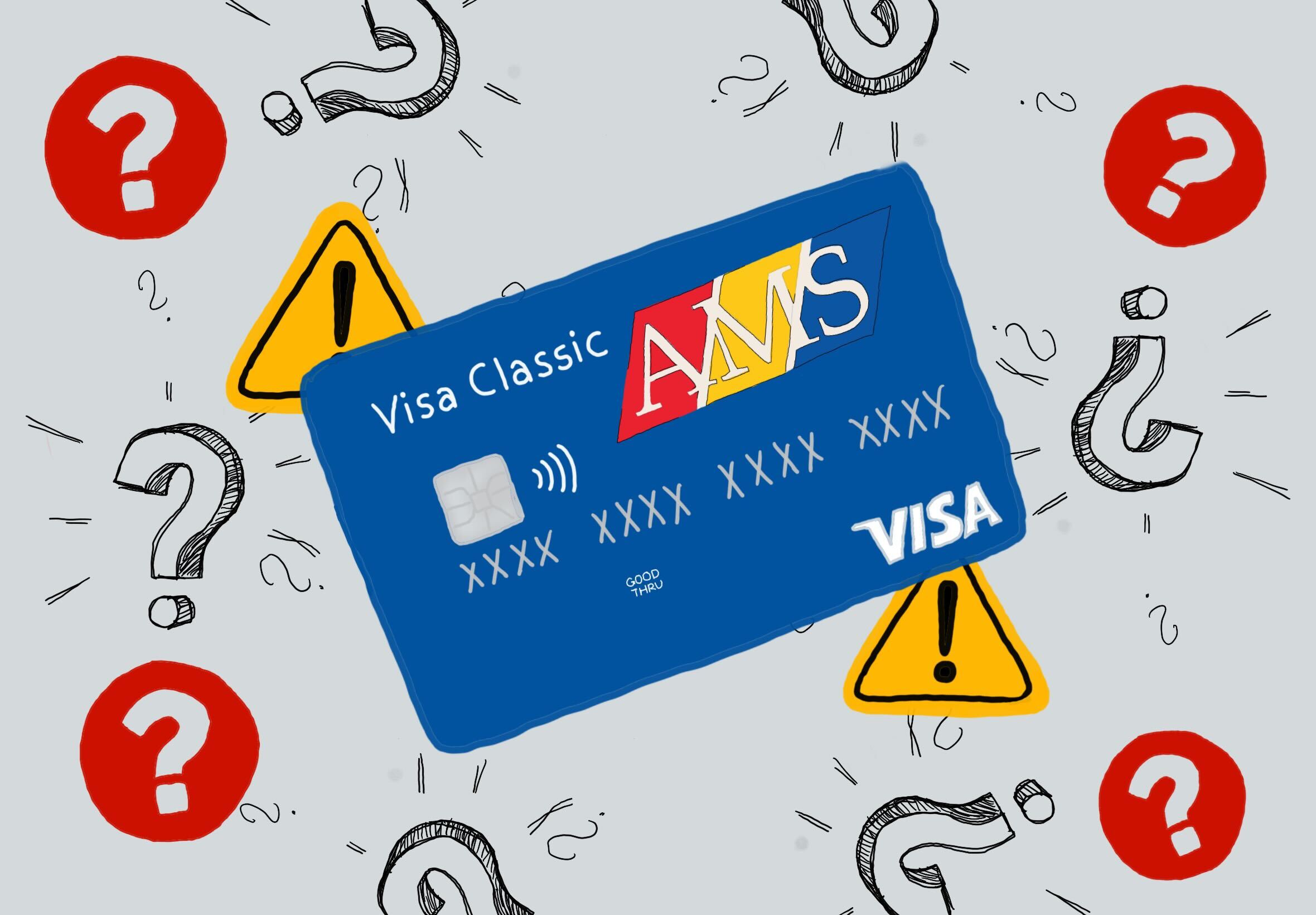
The AMS mishandled the release of information regarding presidential credit card spending, as well as their finances.
On Jan. 28, the Vice-President (University Affairs), Alyssa Perisa, called a Special Assembly to clear up any “rumours” related to the presidential credit card expenses. President Jana Amer clarified that she had “mis-prioritized” managing the presidential credit card, and “accidentally” used the card for a personal expense.
According to Report A1-Management Response to Board of Directors Documents, the total of $27,225.50 was documented between May 1 and Oct. 27. Of this amount, $263.38 was identified as personal costs, and $377.32 couldn’t be classified as either AMS or personal expenses, which Amer nevertheless chose to pay. The report also stated that receipts totalling $1,762.6 couldn’t be located.
Amer stated she “fell behind” on expenses due to the Fall referendum and conducting mid-year hires, raising questions about the role of her team and permanent staff. Routine administrative tasks shouldn’t fall on the president when they’re meant to have a team to help run the AMS.
During Special Assembly, Amer was asked whether she would release the presidential credit card statements to reduce any confusion. Amer responded that this wasn’t her decision to make, and Commissioner of External Affairs, Edlira Ballaj, stated that the statements may be confusing for some students, and she wasn’t sure how “beneficial” releasing them would be.
As well as negating miscommunication, releasing the statements would allow students to become more informed about what presidential expenses entail. Students are more than capable of understanding and evaluating how their money’s being spent, and access to credit card statements would encourage engagement and a better understanding of the AMS and their operations.
Reducing misinformation is especially important since, as of Feb. 12, there’s been no direct statement from AMS executives. The Vice-Chair of the Board of Directors, Eshal Ali, took to Instagram on Jan. 29 to “clarify” any misinformation, insinuating they requested a correction on the Journal story published after the first Special Assembly. The Journal didn’t receive a request for a correction from the Board regarding the amount Amer spent until after the statement was made.
With the presidential credit card set to a $0 limit on Oct. 27, the AMS had plenty of time to manage the situation and control the release of this information before it became a public controversy. The timeframe should’ve given a clear window to communicate facts accurately and directly to the student body, instead of through the Board of Directors. The rollout following Special Assembly on Jan. 28 has only fueled miscommunication, misinformation, and hateful discourse online.
Amer clearly made a mistake—one costing at least $640.70—but students should reserve judgment until more information is made available by the AMS.
In the absence of some answers, online forums have been filled with questions and even anger directed towards the president. One user claimed Amer “stole” the money, stating “she knew what she was doing, and hoped she wouldn’t get caught.” Another characterized Amer as “irresposible, self-serving, and egotistical.”
While the credit card situation is a hot topic on campus, the misappropriation of finances among student governments isn’t as uncommon as some may think. A lack of oversight and an apathetic student body has led to the mismanagement of funds within multiple student governments across Canada.
Despite the information coming out during AMS elections, 16.1 per cent of students turned out to vote for next year’s executive team—a decrease from last year’s 20.4 per cent turnout—highlighting the need for students to increase their engagement with the student government.
This situation should serve as a reminder that accountability, transparency, and student engagement go hand in hand. The AMS can only rebuild trust and transparency with the student body by communicating better with students and releasing information in a timely manner, which informs students on how their fees are being spent.
—Journal Editorial Board
Tags
All final editorial decisions are made by the Editor(s) in Chief and/or the Managing Editor. Authors should not be contacted, targeted, or harassed under any circumstances. If you have any grievances with this article, please direct your comments to eic@queensjournal.ca.